Two-day workshop · Applied chemometrics & SERS
Build spectral methods and models that survive validation
Most reported accuracies for Raman and SERS classification are optimistic, and the cause is almost never the model. It is method design and how the data was split and validated. This workshop teaches the judgement that separates a result that holds up from one that collapses on the next batch.
Next cohort: to be announced · online, live
· 12 to 20 seats
The problem this fixes
A classifier reports 98 percent in development, then falls apart on the next instrument or the next batch of samples. The reflex is to reach for a stronger model. That reflex is usually wrong. The failure is upstream, in leakage, confounders, and validation design that flatter the result. By the end of two days you will be able to find those failures in your own pipeline and shut them out, and to design a SERS or Raman method around the substrate and the matrix rather than the instrument.
Built for practitioners, not for ML specialists
Who it is for
Calibrated for a working scientist with a chemistry or physics background and some Python or R. No prior chemometrics assumed, and no machine-learning background required.
- QC and PAT scientists in pharma and biotech who own or rely on spectroscopic methods and their models.
- Analytical R&D in diagnostics, materials, and instrument companies.
- CRO and core-facility scientists who build pipelines on spectra they already generate.
Outcomes
What you will be able to do
- 01 Design a spectral method around substrate reproducibility and matrix reality, not the spectrometer.
- 02 Build a preprocessing and modelling pipeline that does not leak.
- 03 Validate honestly enough to predict field performance, using group-aware and nested cross-validation and an independent-batch test.
- 04 Prepare a model for a regulated environment, with the outlier detection, data-integrity, and lifecycle controls an auditor expects.
Curriculum
The two days
Day one
Data, models, and honest validation
- 01
The real bottleneck
What makes spectral data different, and where the limiting factor actually sits.
- 02
Preprocessing without self-deception
Baseline, normalisation, derivatives — and how each one fails.
- 03
Modelling that fits the problem
PCA, PLS and PLS-DA, and when deep learning is not warranted.
- 04
Validation done right
Leakage, group-aware and nested cross-validation, and the diagnostics that catch a confounder. You will reproduce a 100 percent accuracy on data with no signal, then fix it.
Day two
SERS method design and regulated QC
- 05
SERS and Raman method design
Where enhancement lives, getting the analyte to the hotspot, and why the matrix is where methods fail.
- 06
From R&D to regulated QC
The procedure lifecycle, outlier and out-of-distribution detection, data integrity, and calibration transfer.
- 07
Capstone
Walk a real problem end to end, from method design to a leakage-free model to a validation and data-integrity plan.
Live, hands-on, small cohort
Format and dates
Two consecutive days, delivered live online, hands-on throughout with ready-to-run Python and R notebooks. Cohort capped at 12 to 20 so every participant gets attention on their own data. Bring your own spectra, or use the provided datasets.
- Next cohort
- dates to be announced
- Delivery
- Live online, two consecutive days
- Cohort size
- 12–20 seats
A corporate on-site variant, delivered to a single company’s team, is available on request.
Founding cohort
Pricing
Founding rate
Founding-cohort seat
€590
Limited to this cohort only. Standard price thereafter is €900 to €1,200.
Academic & early-career
€350
For students, postdocs, and academic staff.
Corporate on-site
On request
One to two days for a single company’s team, same content.
A deposit secures your seat. Seats are limited and allocated in order of application.
Who teaches it
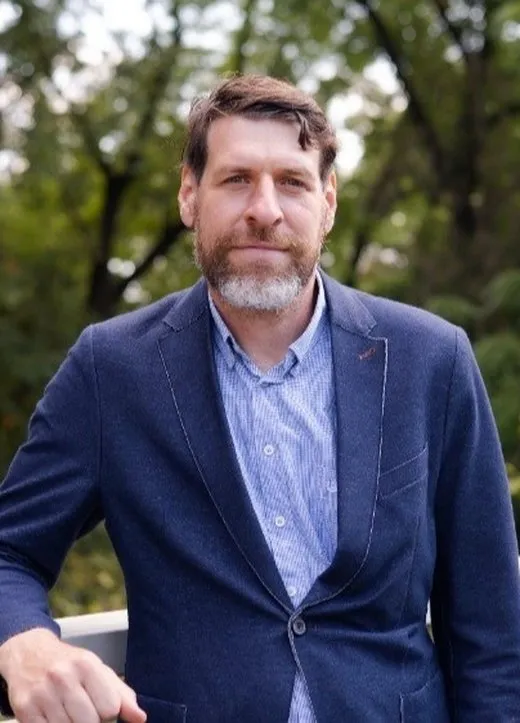
An analytical chemist with over 20 years in academic research, specialising in surface-enhanced Raman spectroscopy and the chemometric and machine-learning methods that turn spectra into validated results. Author of more than 85 peer-reviewed papers, named inventor on four granted patents, and principal investigator on multiple international research grants. The workshop is taught privately and independently.
Takeaways
What you leave with
- A working, leakage-free pipeline you built and understand.
- The validation and data-integrity checklist used across the two days.
- The notebooks, the synthetic teaching datasets, and the slides.
- A direct line to ask follow-up questions on your own method after the workshop.
Questions
FAQ
- Do I need to be good at machine learning? +
- No. The workshop is for spectroscopists, not data scientists. Basic Python or R is enough.
- Python or R? +
- Both are provided. Use whichever you work in.
- Can this be delivered to my team on-site? +
- Yes. The corporate variant covers the same content for a single company’s QC or analytical group, on request.
- What if I have no data of my own? +
- Worked datasets are provided for every exercise.
Limited seats · Founding cohort